$

Limited Time Promotion
Out of stock
In Stock
Coming soon
Limited Quantity
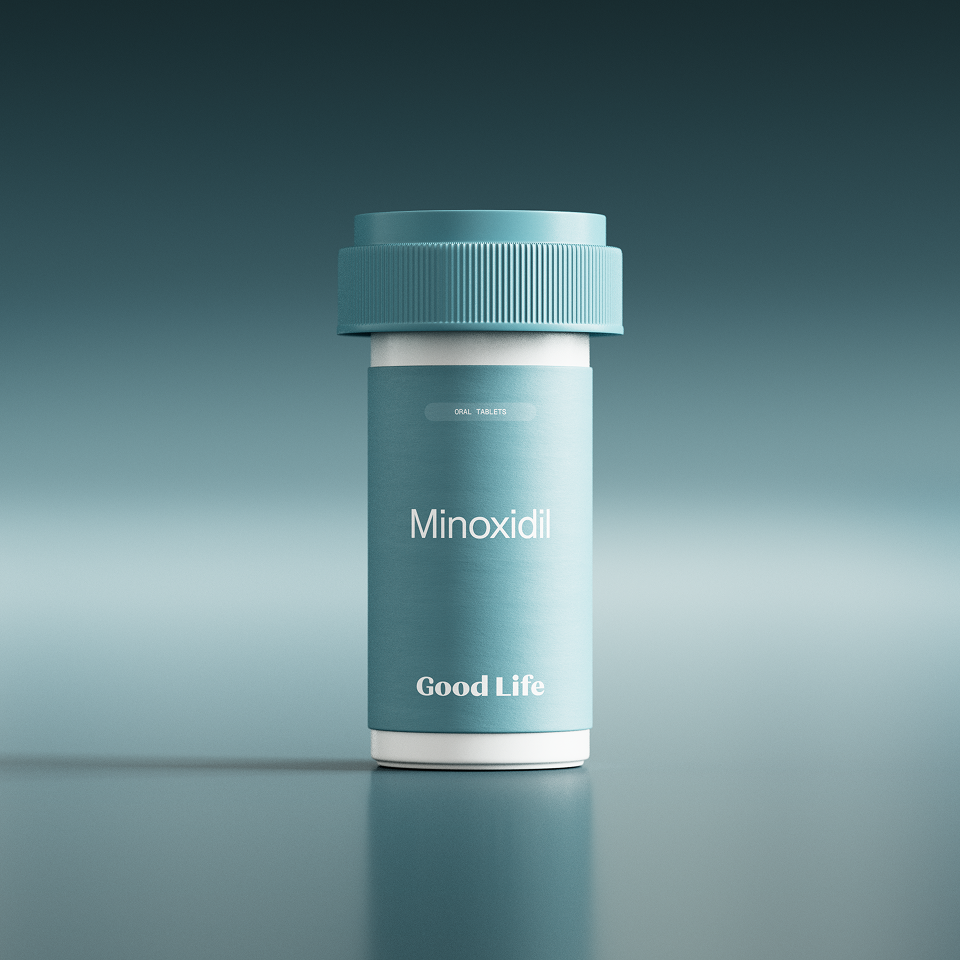
Oral Minoxidil
$
$
Buy now
Searching for a hassle-free hair loss solution? This once-daily pill stimulates hair regrowth by boosting blood flow to hair follicles without altering your hormone balance. It's straightforward and effective.
- Simple, once-a-day medication
- Physician evaluation, 100% online
- Free shipping, direct to your door
Starting at $30/month
Free expedited shipping
Lab tested for quality to promote patient safety
No insurance required
Limited Time Promotion
Can women use oral minoxidil?
It's a great option for women wanting a simple way to regrow hair without affecting hormones or applying a product.
Who is oral minoxidil for?
Oral minoxidil is for people experiencing androgenetic alopecia, also known as male pattern baldness. While there are many different medications available, many patients find taking one oral minoxidil pill a day easier than. applying a topical medication twice a day. A simpler routine can be easier to stick to, which can support better results.
Another reason patients may opt for oral minoxidil is to avoid the (slight) risk of sexual side effects from taking finasteride.
While a patient's preference is always considered, providers will ultimately make medication recommendations based on the individual's medical history, along with the contraindications and side effects associated with oral minoxidil.
What is oral minoxidil?
The active ingredient in oral minoxidil is identical to the one in topical minoxidil, which has been FDA approved and used to treat hair loss for years. Oral minoxidil is just the convenient once-a-day pill version for anyone looking to regrow their hair with a simple routine.
While topical minoxidil is FDA-approved to treat hair loss and is available without a prescription, oral minoxidil is considered off-label and requires a prescription. Healthcare providers have the discretion to prescribe a medication off-label if they believe it's an appropriate course of treatment for a particular patient.


Support stronger growth, restore your confidence
A simple daily tablet that helps stimulate hair growth, strengthen follicles, and promote thicker, healthier hair.
Get started
Benefits
Promote healthier follicles & enhance natural growth
Promotes hair regrowth
Supports thicker, fuller hair by helping stimulate follicle activity.
Reduces excessive shedding
A simple oral dose that makes staying consistent effortless.

Once-daily convenience
Simple oral tablet makes consistent use easy.

Scientifically proven
Backed by clinical trials demonstrating significant efficacy and results.
Real Stories, Real Results
Discover reviews from
Verified Customers
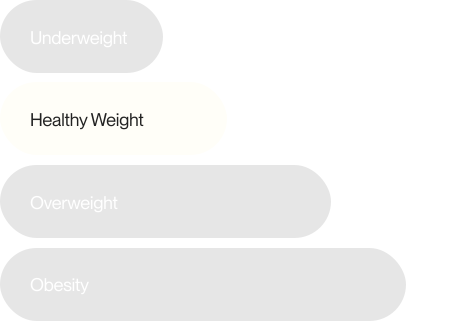
BMI Calculator
BMI stands for Body Mass Index. It’s a measurement that uses your height and weight to estimate if your weight is in a healthy range for your height.
Thank you! Your submission has been received!
Oops! Something went wrong while submitting the form.
*BMI doesn’t directly measure body fat and may not accurately reflect health for people with high muscle mass, pregnant women, children, older adults, certain ethnic groups, or those with medical conditions. It shouldn’t be used as the only way to assess health. The BMI calculator does not determine eligibility for weight loss medications. A healthcare provider must evaluate your overall health and history to decide if medication is right for you.
Your BMI
0




Always quality tested, with proven results



Our medication is conveniently delivered from a state-licensed pharmacy within our network, straight to your door when you need it.
Every batch is fully tested in full chemistry and microbiology labs at the Drug Manufacturer facility to meet strict guidelines and parameters. This provides full confidence in producing industry best results for our consumers through strict compliance with cGMP regulations.
Potency
Passed
This test is performed every 3 to 6 months. It confirms that the medication has plus or minus 10% of the appropriate concentration of the active ingredient.
Sterility
Passed
This test ensures the medication is free from any contaminants, including bacteria or other pathogens. Every batch is tested and must meet the requirements of USP 797.1.
pH
Passed
This test assesses the acid/base balance to ensure minimal irritation upon injection.
Endotoxicity
Passed
This test, along with sterility testing, ensures the medication is free of harmful toxins. Every batch is tested for bacterial endotoxins, which may not exceed the threshold limits defined in USP 85.

.png)
How it works
01
Simple Questionnaire
Choose the plan that fits your needs, then complete a free medical intake and health history form for review by a licensed provider.
02
Provider Evaluation
Our licensed medical provider will review your medical history and determine if the medication is right for you and your needs.
03
Approved & Delivered
Your prescription gets approved and ships straight to your door in discreet packaging within 3–5 business days.
Good Life Health Guide
Expert insights on health, wellness, and modern care.
View all
%25201%2520(1).png)
Min Read
.png)
Min Read
%25201.png)
Min Read
.png)
Min Read
.png)
Min Read
.png)
Min Read
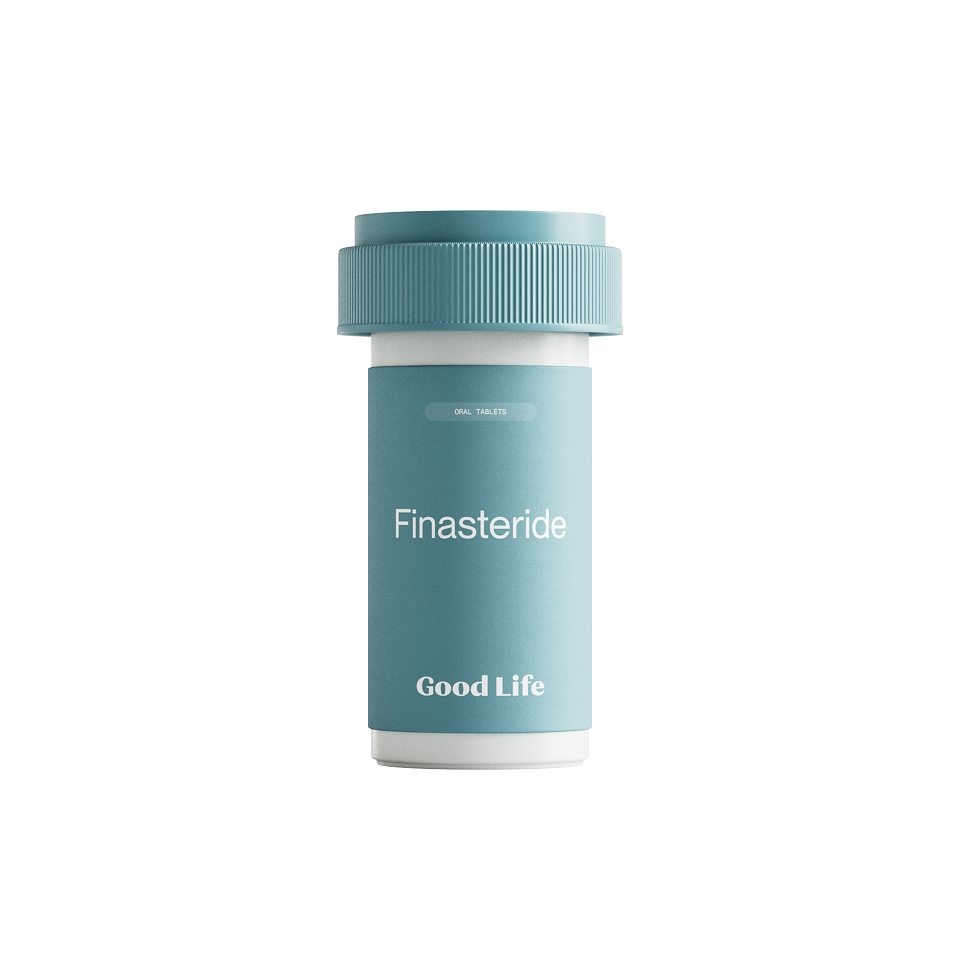
Finasteride (Generic Propecia®)
Rx
Treats male pattern baldness
Hair Regrowth for Men
Rx
3-in-1 Topical Spray - hair regrowth

Frequently asked questions
Who is oral minoxidil for?
Many patients find it easier to take a medication by mouth once a day vs. applying a topical treatment . A simpler routine can help to improve treatment adherence and consistency (in other words, it’s easier to make and keep a daily treatment habit), which supports better results.
While a patient’s preference is always taken into consideration, treatment recommendations will be primarily informed by the individual’s medical history along with the contraindications and potential side effects of oral minoxidil.
What are the most common causes of hair loss in women?
While there are any number of underlying causes for hair loss that affect women, the vast majority of cases can be attributed to one of two conditions. Sometimes these two conditions overlap with both of them contributing to an individual’s noticeable hair loss.
The most common cause is called female pattern hair loss (FPHL). It is a chronic, progressive hair loss that can start at any age and presents as progressive thinning of the hair, particularly at the top and front of the scalp. The cause is not entirely clear but is believed to be multifactorial, including possibly genetic predisposition and hormonal factors. The earlier medication is begun the better likelihood of slowing progression and seeing regrowth.
The other common hair loss condition is called telogen effluvium (TE). The condition is characterized by an increase in the amount of shedding that one normally experiences. The condition represents the early release of hairs that are in the resting phase of the hair growth cycle. It’s typically brought on by some sort of trigger event. Most commonly this happens after childbirth with about 30-50% of postpartum women experiencing it. Other potential triggers include major life stressors, hospitalization, illness (e.g., COVID), surgery, and certain medications.
TE also has a specific chronic form that typically affects women 30-60 years of age. There is no identifiable trigger to the increased hair shedding for chronic TE. It can run a course over months and years with the shedding fluctuating in terms of severity. Even if it’s been going on for years there is no progressive change in density that is noticeable to an observer, but the individual affected may note decreased volume.
Good Life offers access to medication for both of these hair loss conditions.
What are the most common side effects of oral minoxidil?
Common side effects can include low blood pressure (hypotension) and swelling in the legs (edema), among others. Some people experience headaches, although those typically improve over time. Others may experience additional hair growth on the face or body (hypertrichosis). This is the most common side effect of taking oral minoxidil, though the complaint is more common among women than men and is also more common when taking over 5 mg per day.
Side effects of oral minoxidil may be more pronounced when the drug is prescribed at higher doses. For full safety information (including the boxed warning)
What should I expect when taking Oral Minoxidil?
- Early results may be seen within a few months, but it could take longer to see the full effects
- You may experience shedding during the first few weeks of medication. This is normal and shouldn’t cause you to worry. Extra shedding will resolve as the new hair grows in (usually in about a month)
- If you do not see improvement after 6 months of consistent use, you can message your provider to discuss adjusting your medication plan
When can I expect to see results?
Oral minoxidil was originally studied for blood pressure, and the hair growth effects were unintentional. In clinical trials, patients who experienced hypertrichosis (“elongation, thickening, and enhanced pigmentation of body hair”) noticed it on the forehead and temples, between the eyebrows, or on the upper part of the cheeks within three to six weeks after beginning treatment. Hair growth on the scalp was observed at a later date.
Similar to topical minoxidil, oral minoxidil takes a few months to produce noticeable results to your crown and hairline. If you stop taking oral minoxidil, new hair growth will stop as well.
Oral minoxidil might not work for everyone or may only partially resolve the concern. If you aren’t getting the results you hoped for, you can always reach out to your provider to discuss treatment options.
What’s the difference between topical minoxidil and oral minoxidil?
Topical minoxidil is an FDA-approved hair loss medication that does not require a prescription whereas oral minoxidil is considered an off-label prescription for hair loss and does require a prescription. “Off-label” means it’s not FDA-approved for that particular use, but can still be prescribed at the provider’s discretion.
Topical and oral minoxidil contain the same active ingredient. While there have not been clinical studies comparing their efficacy, there appear to be some benefits of using an oral treatment method vs. a topical medication method, such as more precise dosing and better medication adherence & consistency.
Some people may also benefit less from topical minoxidil due to lower levels of a specific enzyme in their hair follicles (follicular sulfotransferase). Oral minoxidil may be an effective alternative in this case, as the medication is absorbed systemically and is thought to be activated by the liver.
Some people may get results from topical minoxidil but still want to consider oral minoxidil due to negative experiences with the topical such as scalp irritation, medication running down your neck before you can rub it in, or the hassle of applying medication two times a day.
Using both topical minoxidil and oral minoxidil at the same time will not produce better results and therefore, is not recommended.
What’s the difference between oral finasteride and oral minoxidil?
Oral finasteride is an FDA-approved prescription hair loss medication, while oral minoxidil is considered an off-label prescription for hair loss. This means oral minoxidil is not FDA-approved for that particular use, but a provider can still prescribe it if they deem it safe and appropriate for the patient.
Oral minoxidil may be preferred by men who do not want to risk the known slight chance of sexual side effects from taking finasteride. Oral minoxidil and oral finasteride have different mechanisms of action to tackle hair loss. Your provider will recommend a medication based on your medical history, lifestyle, and any particular medication preferences or side effect aversions you may have.
Find answers to common questions about our medication subscriptions and medical review process.